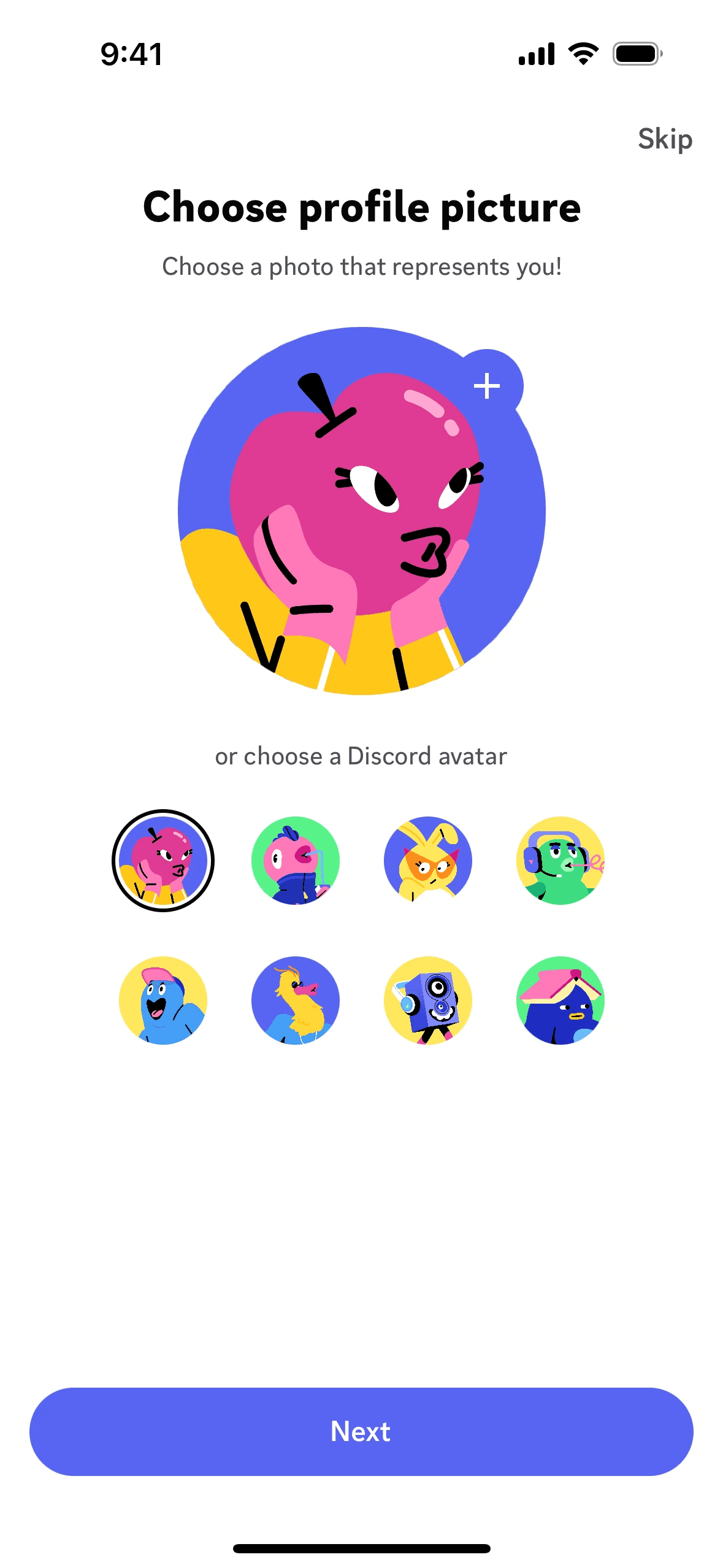
Blurple
Meet Blurple (#5865F2), a vibrant hue that perfectly straddles the line between blue and violet. Its striking saturation and unique position on the color wheel make it a memorable choice for any design palette, offering a fresh yet familiar feel that immediately captures attention.
Blurple Code Conversions
HEX
#5865F2
LAB
49, 38, -72
RGB
88, 101, 242
XYZ
24.7, 17.8, 86.1
HSL
235°, 86%, 65%
LCH
49, 82, 298°
HSB
235°, 64%, 95%
LUV
49, -12, -113
HWB
235°, 35%, 5%
Blurple Color Harmonies
Analogous
As neighbors on the color wheel, analogous colors pair with Blurple to create a harmonious palette that feels both balanced and serene.
Complementary
A complementary color sits directly opposite on the color wheel. Paired with Blurple, its complement creates a striking combination with maximum visual contrast.
Split Complementary
A split complementary scheme for Blurple uses the two colors adjacent to its direct complement, offering high contrast with more nuance.
Triadic
A triadic harmony uses three colors equally spaced on the color wheel, creating a vibrant, high-contrast palette with Blurple as its foundation.
Tetradic
A tetradic scheme for Blurple involves two sets of complementary colors, creating a rich, four-color palette arranged in a rectangle on the color wheel.
Square
A square color scheme uses four colors evenly spaced on the color wheel, creating a vibrant and high-contrast palette with Blurple.
Blurple Contrast Simulation
Blurple Color Variations
Shades
Shades are created by adding black to Blurple, giving the color more depth and gravity.
Tints
Tints are created by adding white to Blurple, resulting in softer, lighter variations.
Tones
Tones are muted versions of Blurple, created by adding gray to soften its saturation.
Hues
Hues are variations of Blurple, differing in intensity or temperature to create unique visual effects.
What Interfaces Use Colors Like Blurple?